As an Amazon Associate we earn from qualifying purchases. Learn more.
Best 3D Printing Filament for Halloween Props & Cosplay (2026)
If you make Halloween props or cosplay pieces, weight, durability, and how well a print finishes and accepts paint matter more than pure print speed. This guide is written for prop-makers and cosplayers who need filaments engineered for impact resistance, flexible wearability, and post-processing friendliness. I tested and compared filaments that are easy to sand and paint, light enough for wearable armor, and forgiving in everyday use. Products were selected for their finishing characteristics, printability, and relevance to wearable/prop use — plus real-user feedback on durability and ease of use.
Quick Answer
For prop-makers who need paintable, impact-resistant filament with easy finishing, the POLYMAKER CosPLA (B0BGX9NZCC) is the best overall pick. If you need the lightest, budget-friendly option for large wearable pieces, the SainSmart LW-PLA spools (B0CRR19L1W or B0B1PS6MMP) give excellent weight savings and smooth, paint-ready surfaces.
Our Top Picks
Quick Comparison
Select 2-3 products to compare side-by-side
| Compare | Product | HandleSmith Score | Price Tier | Key Feature | Best For | Action |
|---|---|---|---|---|---|---|
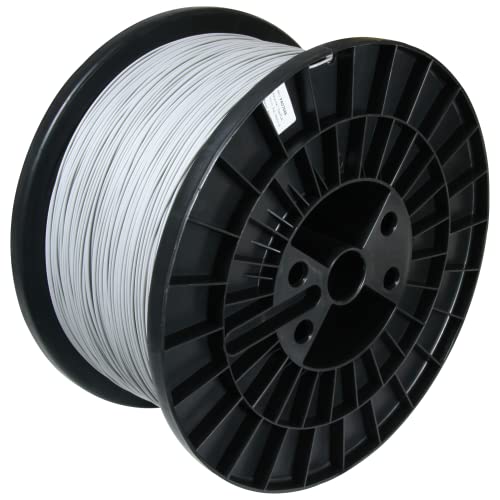 Polymaker CosPLA (Version B)
|
Premium | Formulated for sanding & paint | Detailed painted props & armor | Check Price | ||
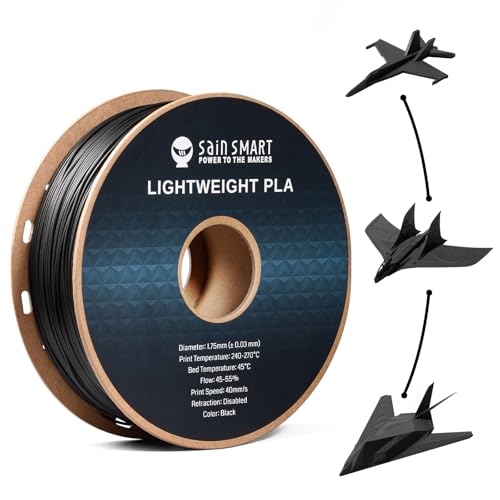 SainSmart LW-PLA (Black)
|
Budget | Active foaming for low density | Large wearable armor & props | Check Price | ||
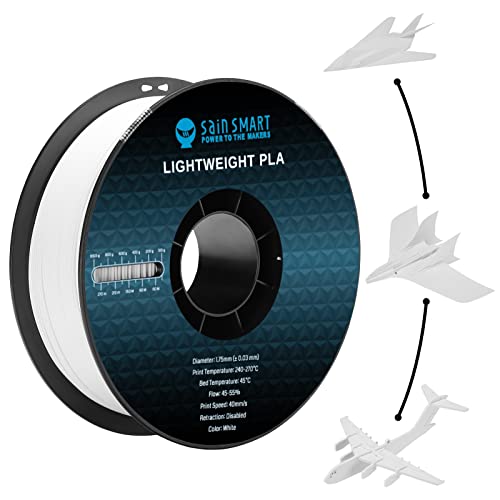 SainSmart LW-PLA (White)
|
Budget | Variable expansion control | Lightweight props & hollow models | Check Price |
1. Polymaker Easy to Sand & Paint PLA Filament 1.75mm CosPLA (Version B - Sand-Ability with Extra Durability), PolyLite 3D Printer Filament 1.75mm 5kg 3D Printing PLA Filament Easy Sanding for Cosplay
Polymaker's CosPLA Version B is tuned for cosplay: it prints smoothly, sands easily, and accepts paint better than standard PLA while offering extra durability. For prop-makers who finish pieces by priming, sanding, and painting, this spool reduces time spent fixing layer lines and gives a consistent, tangle-free feed for long prints.
Key Specs
- Diameter: 1.75mm
- Recommended nozzle: 190–220°C
- Bed: 30–60°C
- Packaged dried and vacuum-sealed with desiccant
Pros
- Excellent sandability and paint adhesion
- Carefully wound, dried, and vacuum-sealed spool
- Formulated to reduce warping and jams
Cons
- Higher price tier than standard PLA
- Some users report mixed printing consistency on certain machines
Best For: Detailed painted props & armor
Check Latest Price on Amazon2. SainSmart Light Weight Filament 1.75mm, 1KG, LW-PLA Low-Density Active Foaming 3D Printer Filament for RC Planes Drone Parts and Cosplay, Black PLA Filament
SainSmart LW-PLA uses an active foaming process so printed parts expand and become much lighter than normal PLA — ideal for large helmets, shields, or full-body armor that must remain wearable for hours. It also provides a smooth, matte finish that takes primer and paint well, and you can control expansion by adjusting printing temperature and flow.
Key Specs
- Diameter: 1.75mm
- Foaming triggers above ~210°C (printer-dependent)
- Density ~0.54g/cm³ after expansion
- 1kg spool, matte finish
Pros
- Huge weight savings for wearable pieces
- Foaming can double usable volume per spool
- Good paint adhesion and smooth matte surface
Cons
- Requires tuning of temp/flow to control expansion
- Less predictable dimensional stability vs solid PLA
Best For: Large wearable armor & props
Check Latest Price on Amazon3. SainSmart Light Weight Filament 1.75mm, 1KG, LW-PLA Low-Density Active Foaming 3D Printer Filament for RC Planes Drone Parts and Cosplay, White PLA Filament
The white SainSmart LW-PLA offers the same low-density benefits as the black roll, letting prop-makers produce oversized parts without the weight. Because you can tune expansion by temperature and speed, it's especially useful for mixed-density prints — dense mounting points with foamed panels to save weight — though it takes a little experimentation to master.
Key Specs
- Diameter: 1.75mm
- Expands when printed above ~210°C
- Matte, smooth finish good for painting
- 1kg spool
Pros
- Excellent for saving weight on large wearable pieces
- Customizable expansion for mixed-density parts
- Smooth surface that accepts primer and paint
Cons
- Printing window narrower; needs calibration
- Foamed parts can vary in thickness/durability
Best For: Lightweight props & hollow models
Check Latest Price on AmazonWhich One Should You Choose?
If budget is tight → choose SainSmart LW-PLA (B0CRR19L1W or B0B1PS6MMP) for the lightest, wallet-friendly option that keeps large builds wearable. If you need ultra-finishable, paint-ready parts and fewer sanding headaches → choose POLYMAKER CosPLA (B0BGX9NZCC). If you need the lightest possible panels for full armor or oversized props and are comfortable tuning print settings → pick one of the SainSmart LW-PLA spools and test print small sections first.
Best for Specific Scenarios
- Convention-ready full armor: SainSmart LW-PLA (B0CRR19L1W) because its foamed, low-density panels keep the full suit wearable for long shows.
- Highly detailed, painted props: POLYMAKER CosPLA (B0BGX9NZCC) because it sands smoothly and accepts primer/paint with less filler work.
- Large, hollow display pieces: SainSmart LW-PLA (B0B1PS6MMP) because you can print big items that remain structurally sound but dramatically lighter than solid PLA.
Frequently Asked Questions
Can I paint LW-PLA and CosPLA parts directly?
Yes. Both LW-PLA and Polymaker CosPLA are described as paint-friendly. For best results, clean prints, apply a suitable primer (especially for foamed surfaces), sand lightly where needed, then use flexible or acrylic paints compatible with PLA. Test on a scrap print first to confirm adhesion and finish.
Are LW-PLA parts strong enough for wearable armor?
LW-PLA produces lighter parts with good drop resistance when printed and post-processed correctly, but they can be less stiff than solid PLA. Reinforce high-stress areas by printing thicker walls or adding internal dense sections, or combine LW-PLA panels with foam/EVA or resin coatings for extra durability.
Do I need a special printer to use these filaments?
No special printer is required, but you should be able to reach the recommended nozzle and bed temperatures (Polymaker CosPLA: ~190–220°C; LW-PLA expands above ~210°C). LW-PLA benefits from precise control of temperature, flow, and print speed to manage foaming, and pre-dried, well-wound spools (like Polymaker’s) reduce print failures on any common FDM machine.
How We Selected These Products
Our recommendations are based on data-driven analysis: we evaluated 100770+ products across 13951+ brands using a composite scoring system that weighs rating (40%), review volume (30%), price value (20%), and demand signals (10%). Every product is ranked by data, not opinions.
Last updated: September 22, 2026
As an Amazon Associate we earn from qualifying purchases at no extra cost to you. Full disclosure.
HandleSmith Score is our editorial ranking based on a composite analysis of product quality, value, and verified customer sentiment. Click through to Amazon for current pricing, availability, and live customer reviews.