As an Amazon Associate we earn from qualifying purchases. Learn more.
Nitrile vs Cut-Resistant vs Coated Gloves for Holiday Food Prep & Grilling (2026)
Holiday cooking and backyard grilling put unique demands on gloves: you need heat and puncture resistance for carving, a secure grip for greasy tools, and food‑safe disposables for easy cleanup. This head‑to‑head compares three nitrile exam gloves that shoppers use for heavy kitchen prep and BBQ work. I selected these based on thickness, food‑safe claims, customer feedback on fit and durability, and features like textured fingers and latex‑free construction. Read on to see which nitrile glove suits carving, grilling and heavy prep — and how nitrile stacks up against cut‑resistant and coated alternatives.
Quick Answer
For heavy holiday carving, grilling and messy prep the TitanFlex Disposable Nitrile Exam Gloves (ASIN B0BR7S17M7) are the best overall — their 6‑mil nitrile gives thicker puncture and chemical resistance and textured fingers for a secure grip. If you want the best value pick the mid-range TitanFlex (ASIN B0BR7SBC41); the Schneider 4‑mil (ASIN B09DPNT5H9) is the budget option for lighter, more tactile tasks.
Our Top Picks
Quick Comparison
Select 2-3 products to compare side-by-side
| Compare | Product | HandleSmith Score | Price Tier | Key Feature | Best For | Action |
|---|---|---|---|---|---|---|
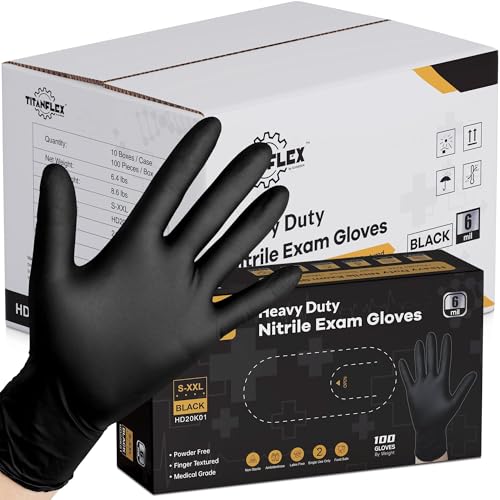 TitanFlex 6-mil (Schneider) |
Premium | 6‑mil heavy‑duty nitrile | Heavy-duty carving & grilling | Check Price | ||
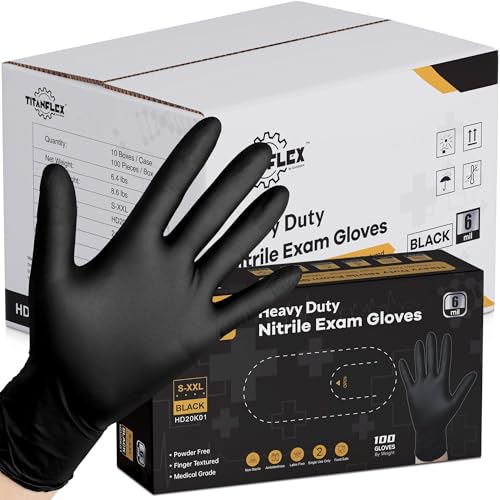 TitanFlex 6-mil (Mid) |
Mid-Range | 6‑mil heavy‑duty nitrile (value) | Big hands, heavy prep on a budget | Check Price | ||
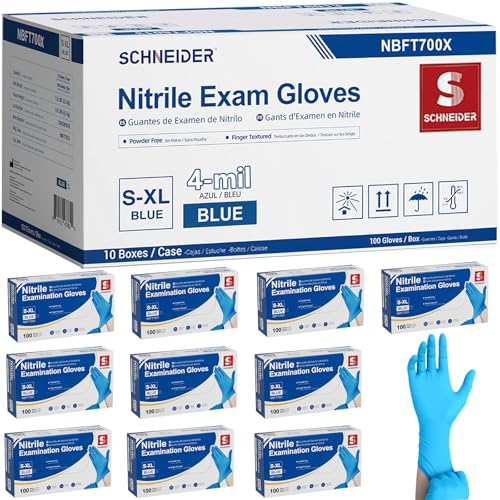 Schneider 4-mil (Blue) |
Budget | 4‑mil tactile nitrile | Light prep & touchscreen tasks | Check Price |
1. TitanFlex Disposable Nitrile Exam Gloves, 6-mil, Black, Heavy Duty, Latex Free, Food Safe for Cooking & Food Prep
Thicker 6‑mil nitrile offers stronger puncture and chemical resistance than thinner exam gloves, plus textured fingers for grip in greasy conditions. Customers praise durability and fit; expect a snug, food‑safe disposable suited to tough holiday tasks.
Key Specs
- 6‑mil nitrile thickness
- Latex‑free, powder‑free
- Textured fingers for slip resistance
- Medical exam grade / food‑safe rated
Pros
- Stronger puncture and chemical resistance than 4‑mil options
- Better grip on greasy tools vs untreated gloves
- Food‑safe and hypoallergenic latex‑free construction
Cons
- Disposable — not reusable like coated or work gloves
- Some shoppers report mixed sizing (runs slightly large or small)
Best For: Heavy-duty carving & grilling
Check Latest Price on Amazon2. TitanFlex Disposable Nitrile Exam Gloves, 6-mil, Black, Heavy Duty, Latex Free, Food Safe for Cooking & Food Prep
A mid‑range version of the 6‑mil nitrile formula offering the same core benefits — thick material, textured grip and food‑safe use — at a lower price tier. Noted for accommodating larger hands and good value for heavy kitchen and mechanic tasks.
Key Specs
- 6‑mil nitrile thickness
- Latex‑free and food‑safe
- Textured finger surface
- Medical exam grade claims
Pros
- Similar heavy‑duty protection as the premium TitanFlex for less cost
- Often a better fit for larger hands compared with thinner gloves
- Durable for greasy, mechanical and food tasks
Cons
- Disposable — cannot replace a reusable coated glove for long projects
- Size opinions vary; some users find sizing inconsistent
Best For: Big hands, heavy prep on a budget
Check Latest Price on Amazon3. Schneider Nitrile Exam Gloves, Blue, 4 mil, Powder-Free, Latex-Free, for Medical Exam, Cleaning and Food Prep, Non-Sterile
A thinner 4‑mil nitrile glove that trades some puncture strength for better dexterity and touchscreen compatibility. It’s a solid budget pick for lighter kitchen prep, cleaning and tasks where finger sensitivity matters.
Key Specs
- 4‑mil nitrile thickness
- Latex‑free, powder‑free
- Ambidextrous and elastic fit
- Waterproof and touchscreen compatible
Pros
- Better tactile feel and dexterity than thicker 6‑mil options
- Good value for routine food prep and cleaning
- Comfortable, snug fit for smaller hands
Cons
- Less puncture resistance than 6‑mil nitrile
- May run small for some users
Best For: Light prep & touchscreen tasks
Check Latest Price on AmazonWhich One Should You Choose?
If premium quality matters → Buy TitanFlex Disposable Nitrile Exam Gloves (ASIN B0BR7S17M7). The 6‑mil nitrile gives the best puncture and chemical resistance in this group and textured fingers make carving and handling greasy tools safer and easier.
If budget is tight → Buy Schneider Nitrile Exam Gloves (ASIN B09DPNT5H9). The 4‑mil gloves give better dexterity and are a sensible, food‑safe choice for routine holiday prep and lighter grilling tasks.
If you want the best balance of protection and price → Buy TitanFlex Disposable Nitrile Exam Gloves (ASIN B0BR7SBC41). The mid‑range 6‑mil option often fits larger hands better and delivers most of the heavy‑duty benefits at a lower cost than the premium tier.
Quick tip: for carving and serving, use 6‑mil nitrile or a cut‑resistant glove under a nitrile shell if you anticipate blade contact. For repeated handling of hot steel or long grill sessions, pair nitrile disposables with a heat‑rated outer glove or mitt.
Best for Specific Scenarios
- Carving a holiday turkey: TitanFlex 6‑mil (ASIN B0BR7S17M7) because thicker nitrile protects against punctures and offers a secure grip on knives and greasy surfaces.
- Deboning and delicate prep: Schneider 4‑mil (ASIN B09DPNT5H9) because the thinner nitrile improves finger sensitivity and touchscreen use when following digital recipes.
- Backyard grilling & heavy cleanup: TitanFlex 6‑mil Mid‑Range (ASIN B0BR7SBC41) because it balances durability, grip and fit for larger hands during longer, messier grill sessions.
Frequently Asked Questions
Are nitrile gloves safe for food prep and grilling?
Yes — the nitrile gloves reviewed are labeled food‑safe and latex‑free. They provide a hygienic disposable layer for handling raw and cooked foods and resist many oils and cleaning chemicals. Change gloves between raw and cooked items to avoid cross‑contamination.
When should I choose 6‑mil nitrile over 4‑mil?
Choose 6‑mil when you need extra puncture or chemical resistance — for carving large birds, handling bones, or heavy greasy work. Choose 4‑mil when dexterity and touchscreen use are more important, or for lighter prep tasks.
Do these disposables replace cut‑resistant or coated gloves?
No — disposables protect against contamination and some punctures but won’t match a purpose‑built cut‑resistant glove for blade safety or a heavy coated glove for prolonged heat and abrasion. For real cut protection, use a cut‑resistant liner; for heat/abrasion, use a coated or heat‑rated glove.
How We Selected These Products
Our recommendations are based on data-driven analysis: we evaluated 100770+ products across 13951+ brands using a composite scoring system that weighs rating (40%), review volume (30%), price value (20%), and demand signals (10%). Every product is ranked by data, not opinions.
Last updated: November 05, 2026
As an Amazon Associate we earn from qualifying purchases at no extra cost to you. Full disclosure.
HandleSmith Score is our editorial ranking based on a composite analysis of product quality, value, and verified customer sentiment. Click through to Amazon for current pricing, availability, and live customer reviews.